The ESG Lab developed a methodology to project greenhouse gas (GHG) emissions over time using geographical data from NGFS climate scenarios.
Why?
The approach links these scenarios to a defined perimeter of long-term financial assets, enabling forward-looking carbon footprint analysis. A sectoral study was integrated to capture how different industries contribute to changes in portfolio emissions.
• This required mapping between the NGFS classification and the GICS industry standard to ensure consistency in sector attribution. We combined bottom-up estimation techniques with multiple data sources, including corporate emissions databases, public ETF information, and the PCAF attribution method.
• This framework allows us to allocate projected emissions to each asset with greater accuracy. It also highlights the materiality of certain sectors in driving overall portfolio emissions. By merging spatial, sectoral, and financial data, the methodology offers a robust tool for climate scenario analysis.
The result is a granular view of potential future emissions, supporting informed decision-making on climate strategy and portfolio alignment.

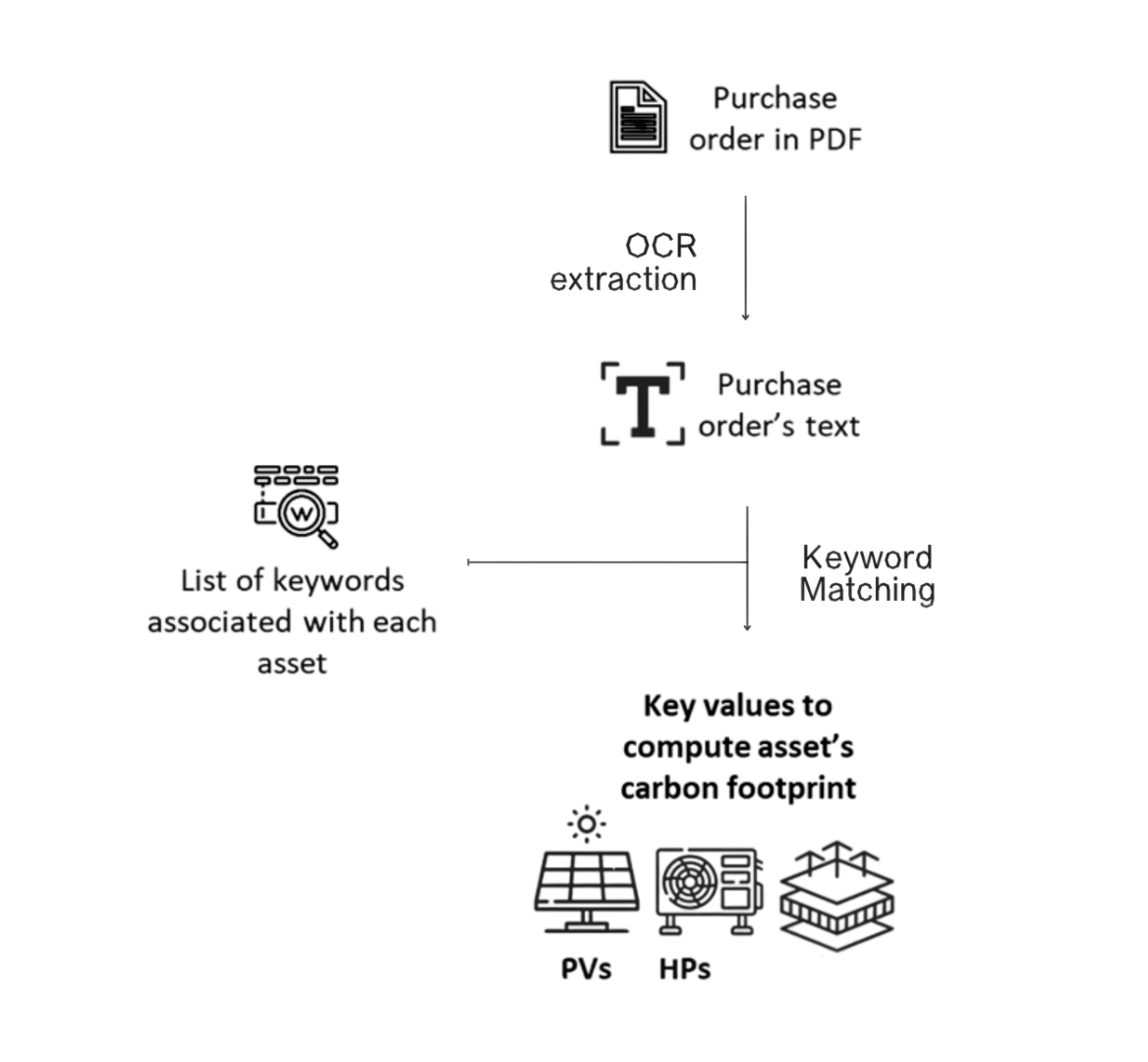
The ESG Lab developed a methodological framework to calculate the carbon footprint (GHG emissions) of priority assets within a portfolio, focusing on photovoltaic panels (PV), heat pumps (HP), and insulation.
Why?
The approach provides a structured way to assess the climate impact of housing-related renovations financed through a consumer credit portfolio. By refining existing research and tailoring it to both internal and external data sources, the framework enables robust and scalable carbon footprint calculations.
• We integrated insights from internal partner datasets and complementary external sources, covering PV/HP energy generation and insulation performance.
• The methodology assesses feasibility, required data inputs, and underlying assumptions, while highlighting the strengths and limitations of different approaches.
• To support operational implementation, we analyzed purchase orders across countries and asset classes, testing whether automated data extraction (notably OCR) could deliver reliable inputs. This included tests of different extraction tools and a subsequent review of available market solutions.
The result was a methodological roadmap, a granular assessment of data availability by country and asset, and practical recommendations on the use of automated extraction. This provides our partner with a solid foundation to calculate and progressively refine carbon footprints for PV, HP, and insulation assets in future project phases, while adapting to data quality and country-specific contexts.

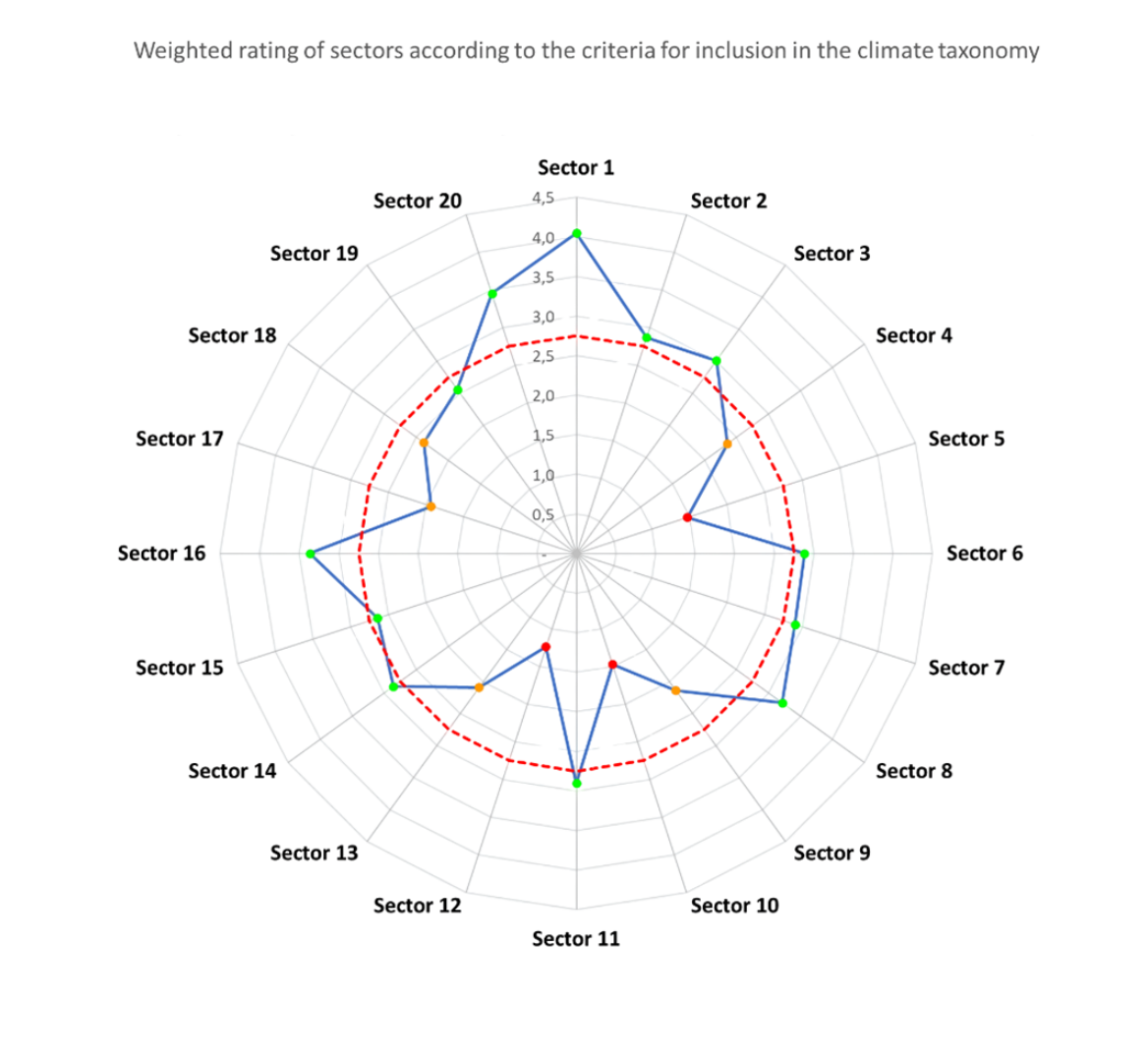
We designed a simple, comprehensive Climate Taxonomy to classify economic activities that significantly contribute to climate change mitigation and adaptation, with the aim of guiding and mobilising financial flows towards the country’s climate objectives.
Developed through a structured, participatory process with financial institutions, the taxonomy combines economic, social, and environmental criteria to prioritise sectors and activities.
How?
For mitigation, a multi-criteria analysis identified key sectors based on GDP contribution, employment, GHG reduction potential, and exposure to transition risks, followed by activity-level eligibility and alignment criteria.
For adaptation, another approach distinguishes activities that adapt themselves to climate risks from those that enhance the resilience of others, supported by national climate risk mapping.
The taxonomy is rooted in Tunisia’s policy priorities, aligned with its NDC and low-carbon strategy, and based on the national activity classification for statistical compatibility. It also reflects the economic reality by including transitional activities that can evolve towards sustainability.