Institute
louis
Bachelor
louis
Bachelor





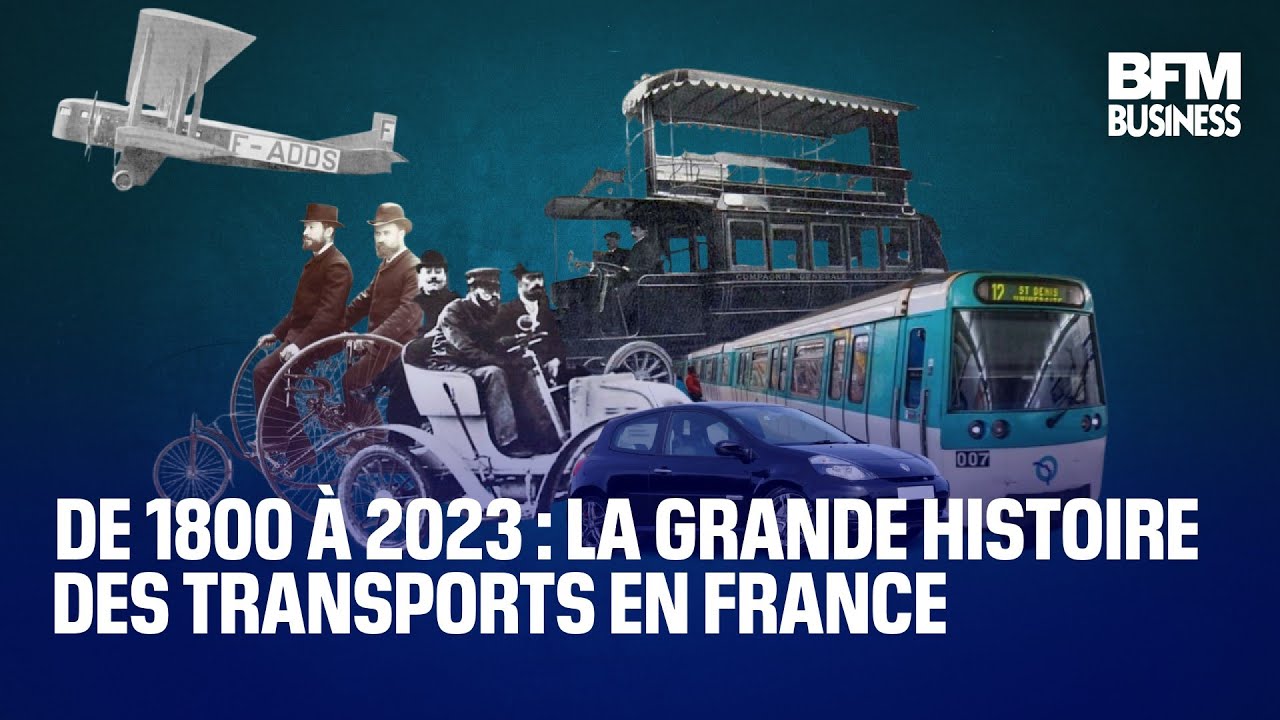
How has the market, once ultra-dominant, been overshadowed by the car and the plane in a few decades?
In a video recently released on BFM Business, Aurélien Bigo, researcher at the Energy & Prosperity Chair, deciphers more than two centuries of transformations in our mobilities — by crossing modes of transport and energies used.
Made with Daniel Breton (Visual Data Flow), the animation traces the distances covered daily in France since 1800, highlighting the technological and energy transitions that have accompanied the rise of modern mobility.
1. We still spend an hour a day traveling... but much farther
In 1800, trips were mostly carried out on foot, at a rate of 4 km per day. In 2023, travel time remains stable, but the average daily distance reaches over 50 km, dominated by the car, followed by the plane.
2. Oil, fuel for hypermobility
The massification of transport was based on a massive dependence on oil: gasoline, diesel, kerosene... In 2023, nearly 81% of the kilometers traveled are still linked to this source of fossil energy.
3. Urbanism, infrastructures and energy transition: a trio to be rethought
Aurélien Bigo recalls that transport infrastructures did not reduce travel time, but increased distances. Far from being neutral, this dynamic has encouraged urban sprawl and is now making the challenges of low-carbon land development more complex.
These observations deeply question mobility and urban planning policies, especially at a time when the energy transition requires us to reduce our dependence on fossil fuels.
Find the complete interview on the site of BFM Business
Aurélien Bigo is a researcher at the Energy & Prosperity Chair, a research program supported by the Louis Bachelier Institute. Created in 2015, the chair aims to inform public and private decisions in the face of the challenges of the energy transition. His work focuses in particular on transport, technological innovation, financial regulation and access to energy.